If someone ever ran a study on musicians per capita, Cabo Verde would certainly land at the very top. The country has an extraordinary number of artists, and You can find most of them on YouTube, of course, but it would be useful to have software built around our own needs.
The original idea behind CVApp
When I first started putting CVApp together, music had its own dedicated section. It was organised by genre and split between emergent artists and the classics. I even built a small framework around the YouTube API so that views would still flow back to the artist's own channels and surfacing the latest videos automatically.
The idea was simple:
- a system that benefits the artists rather than competes with them
- a space for upcoming concerts worldwide
- automatic updates of their newest releases on a site that grows day by day
As of May 2026, CVApp has already reached over four thousand global users who use the site to plan trips, days out across the islands, or simply to read the latest articles.
The reality of building it
I developed CVApp because I genuinely believed it would be practical to have Cape Verdean artists in one digital place, and because I have deep admiration for the music itself. The truth, though, is that gathering them all on a single platform is hard, especially when you are starting out and not yet known in the industry.
I do not blame anyone for that. Being a musician today is difficult enough, and protecting the integrity of your own work has only become harder with AI. There is something genuinely frustrating about seeing music posted online under someone else's name, using their voice and image, when none of it is real. It is illegal, and yet YouTube is increasingly full of it. From the comments alone you can tell that many listeners do not realise the song was generated by AI, or that the duet they are hearing never actually happened.
This is one of the reasons platforms like CVApp matter. They will keep real artists visible and a step apart from the noise of artificial fusions.
Music That Keeps Us Close to Home
I think I can speak for many of us when I say that being abroad makes you debelop a strong missing feeling of what you left back in the country. We even have a word for it: sodade. For Cape Verdeans, music is one of the strongest threads back to the islands, and the range of styles and artists is wide enough to match almost any taste.
When my parents emigrated with me to a small city in Spain in 1994, there were not many other Cape Verdeans around. There was no internet as we know it now, and no international TV channels. Our only way of staying connected with the country was the weekend trip to a shop that offered international calls. They were expensive, so many people usually spoke to one designated relative who relayed news to the rest of the family. Cassettes with the latest musical releases were our souvenirs every time we travelled to Lisbon, Paris, or Cabo Verde.
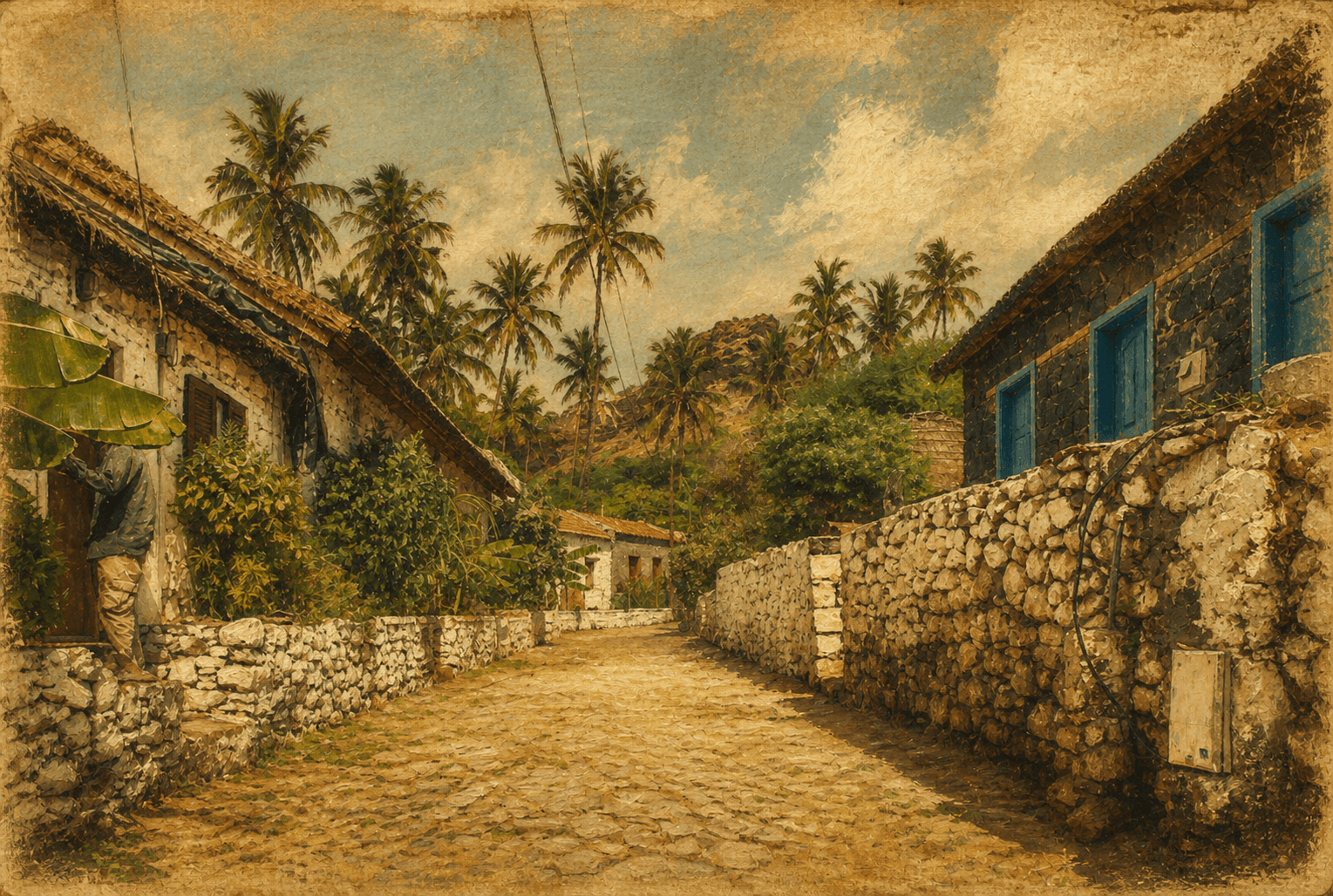
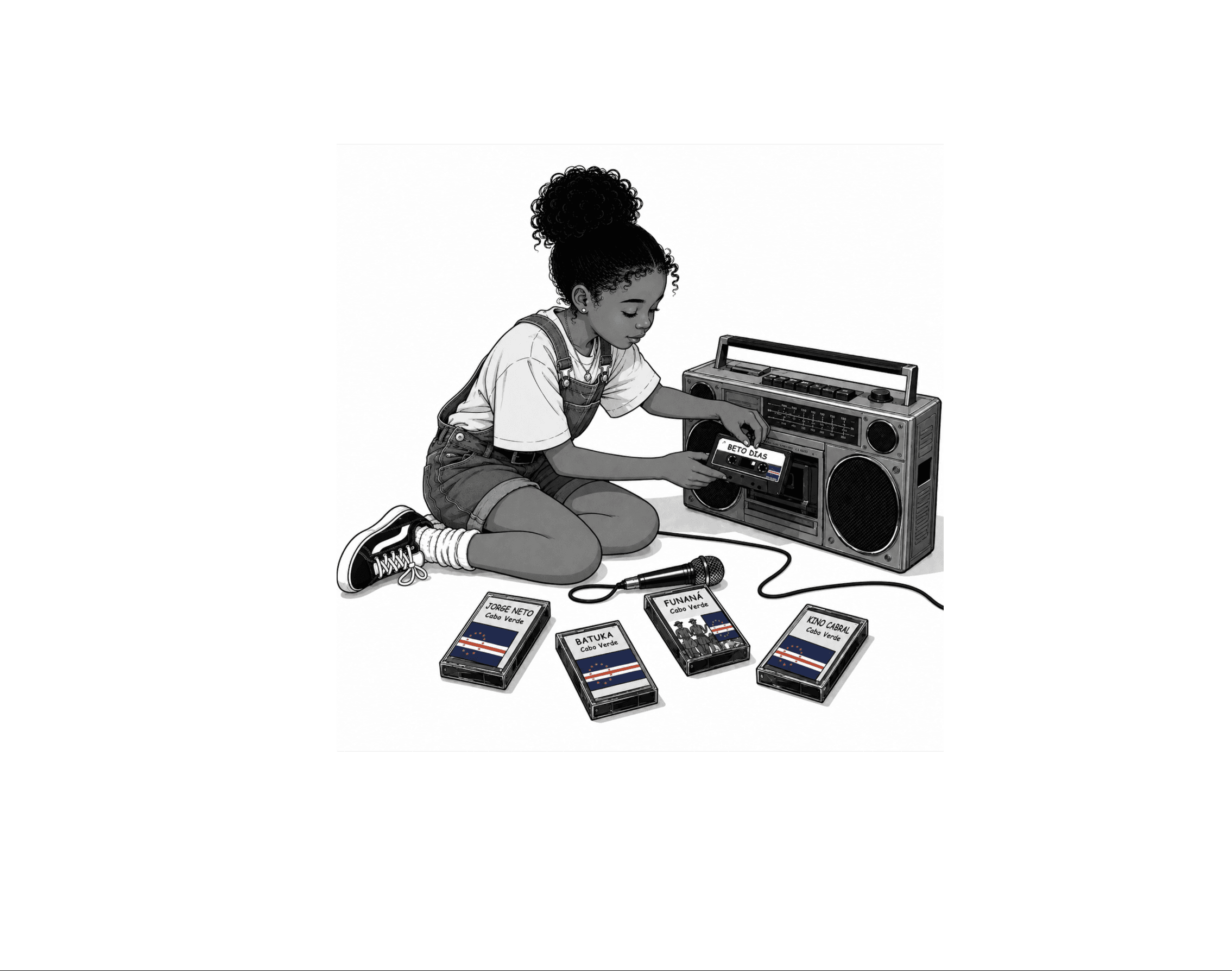
One of my most precious memories, and the one I tried to capture in the illustration for this article, is sitting next to the small radio in the corner of our living room and playing music. My favourite part, was rewinding cassettes with the square end of a Bic pen, intuitively learning the mechanics of it. I strongly believe that constantly listening to those rhythms was one of the reasons our Kriolu remained alive within our family. Music filled our home every day, and I still carry that same joy whenever I listen to music from our culture today.
A short guide to Cape Verdean genres
Cabo Verde's musical tradition is shaped by African rhythms, Portuguese influence, and centuries of cultural exchange.
Batuko
One of the oldest. Percussion-based, traditionally performed by women, and tied to themes of resistance, identity, and community life, especially on Santiago island.
Funaná
Fast and energetic. Once banned during colonial rule because of its strong African roots. Played mainly with accordion and ferrinho, it became one of the country's most popular dance styles after independence.
Morna
Often called the soul of Cabo Verde. Emotional melodies that often centre on love, migration, and sodade. It reached worldwide recognition through the singer Cesária Évora.
Coladeira
Closely linked to Morna but lighter and more rhythmic, blending humour, social commentary, and dance.
Kizomba, Passada, and Afro House
This is where the tradition keeps evolving, mixing local rhythms with electronic, hip hop, and broader African influences.
Through the diaspora, Cape Verdean music continues to spread internationally while still carrying the spirit of the islands.
What Makes Cape Verdean Music So Distinctive
I am not a music expert, but the interest is there and so is lived experience, which is enough to recognise when a track has that quality of shifting your mood and reaching into your feelings.
Most Cape Verdean artists are independent. The lyrics carry strong emotional messages, the rhythm and instruments are carefully tuned, and the result is often something that becomes even stronger when paired with a video shot in a beautiful corner of the country. Lately you see videoclips recorded in the lush interiors of Santiago, in remote villages on Maio, and along the long, quiet beaches.
A growing list of artists and channels
A dedicated section with artists and their channels will be added here as the list grows. If there is someone you think should be included, the email below is the best way to reach us.
How you can contribute
This article is part of a wider effort to gather Cape Verdean insights and facts online in a more dynamic way. It matters to me because growing up abroad meant never learning much of this in school, something many others in the diaspora can probably relate to.
If you feel you can contribute to any of these articles, or you spot something that should be rewritten, please email us at caboverdeplataforma@gmail.com.
I plan to introduce more features as the platform continues to grow. For now, if you enjoyed this article, Feel free to share your thoughts on our Instagram post at @cvapp1.
Continue exploring CVApp
Browse more stories in Culture or return to the full blog archive.